Showing posts with label Race. Show all posts

Sunday, July 23, 2006

Model Minority

Breaking news from the University of British Columbia: the entertainment industry stereotypes Asians. Actually this is news, since we're talking not TV or Hollywood but PC games, the supposed strutting ground of the under-30 Asian male. Specifically, four best-selling desktop titles have been surveyed by a sociology honours candidate and found to reek of subliminal racism.

Parungao, an avid gamer, says the games feature evil gangsters, all of them non-white, who "function as narrative obstacles to be overcome, mastered or ultimately blown to smithereens by the white hero".

I'll accept that Asians get shoddy treatment in GTA, Shadow Warrior and Kung Fu, incidentally those three out of the four that I don't happen to play myself. But Warcraft 3? How exactly are we degraded by a talking alcholic panda? Even if you don't play the game, see which of the two characters below you warm to and which comes across as a complete stiff.


I bring Panda-monium!


Let me face the peril!


Of course the point is that the Asian-accented panda provides comic relief, and that granite-jawed Uther there is the 'norm' around which players are supposed to orient themselves in the Warcaft universe. Ironically the Panderan hero was - rumour has it - introduced in response to complaints that Blizzard had created yet another fantasy world where the humans are all white. Parungao might have noted that it's also a world where the females are all luscious sorceresses or bikini-wearing amazons, but racial pigeonholing would have given him more than enough material for his honours thesis.

It's a strange fact that in the US, Australia and Canada, East Asians are still lampooned to lengths that wouldn't be tolerated for any other minority, as anyone who's seen a Cornetto, Marsbar or Kan-Tong commercial in the last year can attest. At the same time we're burdened by positive stereotypes ranging from industriousness (no affirmative action needed for this model minority) to mathematical competence (I've personally borne that cross everywhere from cadet platoons to history classes). Western societies have a sort of cultural schizophrenia towards East Asians, one with deep historical roots; since Marco Polo set pen to paper, European visions of the Orient have oscillated between earthly paradise and earthly hell, as surveyed by one sinologist.

For other minorities - Hispanics in the US, Muslims in Australia - political debates are about alleged refusal to assimilate. With East Asians it seems no amount of assimilation is enough, not even becoming a US congressman. Instead the problem is getting the white mainstream to defetishise Asians as objects of mockery, mystery or fear. Even as shelves of books are being written about 'the Asian century' and schools scramble to introduce mandarin language courses, Asians remain fodder for everything from condiment ads to gratuitously offensive animated sitcoms.


Yeah, he's an Asian chubby-chaser! Ohh, him so hor-neh! Soooo horrrnnnyyyy!


Coming back to video games, Parungao still has to show that racial stereotyping translates into behaviour, something that's never been conclusively done in the context of game violence (which has brought at least one of his four titles into the public glare before). But he does make an interesting obervation about the industry's social progressiveness vis-a-vis other pillars of the entertainment media -


“Film and television come under greater critical scrutiny so civil rights and minority groups can voice their concerns and effect some change,” [Pangurao] explains. “But video games have generally been seen as kids’ toys. There aren’t the same mechanisms or critical forums to encourage game designers to evolve.”

Parungao may have been a shade generous to film and television. Just how much progress has been made in evolving screen roles for Asian males beyond 'geek', 'triad' or 'martial arts expert', and for Asian females beyond 'exotic sex object'? Rather than continuing to beat the political-correctness drum, I'll let readers judge for themselves from this sample of prominent Asian-American/Australian entertainers. You may notice a trend...


Lucy Liu


Kelly Hu


Kathleen de Leon


Grace Park


Amy Wong


Ming-Na Wen


Mulan


Linda Park


Michelle Ang


Dichen Lachman


Bradley Wong


Update

I emailed Rob Parungao about his perceptions of racial stereotyping in Warcraft 3. Turns out I missed the obvious candidate -
I found that Asians have been repeatedly been typecasted in a sterotypical way (for example, the honorable warrior, the kung fu fighter, or triad gang member). Warcaft 3 was used as an example where 'Asian-ness' in games is sometimes subtle - that is the Orc Blademaster isn't physically Asian (he's big and green) but he is inferentailly Asian. While not overt, racial sterotypes still persist in WC3. For example the Blademaster's bad accent or the framing of him as an honor bound samurai-esque warrior. Pandarians too follow in the same fashion with the large rice hat and again heavy accented. Since WC3 was put out quite recently, I used it to illustrates the fact that many of perceptions of Asians we find in early video games and early film (like Hollywood movies of the 1920s and 1930s) are still still being reproduced today.

That's an extract from a lengthy explanation Rob prepared for a concerned Blizzard employee (possibly from their PR department). The other side of the coin is that the blademaster is arguably the most versatile hero in the game, a fact I suspect Rob left out of his thesis. Good at many things and good-for-a-laugh - that's what it means to be Asian...

Tasta Mah Blade!


Update No.2

More discussion at China History Forum, which may seem a strange site for it if you know nothing about people who spend spare time talking history online.

Thursday, September 29, 2005

White Australia Redux


The Andrew Fraser saga sputters on, with enough energy to generate a bit of heat but not a really big bang. Having dented Macquarie’s reputation, the good professor’s quest to rouse the racial consciousness of Anglo-Australia recently added Deakin University to its casualty list. Faced with a prospective racial vilification suit, Deakin’s Vice-Chancellor ordered the university’s law review to axe a peer-reviewed article by Fraser, whose field is constitutional law. In the age of the internet however, someone – not necessarily in the same country – will always get their hands on the forbidden fruit. Fraser’s article is available here in full, courtesy of National Vanguard (“Standing Up for White Americans”). Nevertheless free speech isn’t worth anything without clarity, so in the interests of clearing the media smoke that’s surrounded this affair I’ve read the piece through and dissected Fraser’s argument.

His main points seem to be –

- Racial difference is a biological reality with scientific backing. Culture not simply a social construct but has a substantial biological component: it is a racial ‘phenotype’, produced by interaction between a racial group’s genotype and its environment. Cultural difference, therefore, is racially determinate and cannot simply be dissolved through common value systems or ideological creeds.

- The Anglo-Saxon phenotype is characterised by individualism, nuclear families and deemphasis on extended kinship relations. The net consequence is a relative lack of ethnocentrism among Anglo-Saxons, to be contrasted with the clannishness and xenophobia of other races (e.g. the Chinese). Thus “[Australia’s] creedal commitment to racial egalitarianism [is in reality] a defining characteristic of a distinctive European racial identity”.

- The Anglo-Saxon democracies, including Australia, are an expression of this “primordial English ethnicity” rather than of ideological creeds. Australia is founded not on Enlightenment principles of liberty and equality, but on the “non-kinship based forms of reciprocity” associated with the Anglo-Saxon race. To quote further:

“The only racial groups able to fit seamlessly into the society of strangers constituting a civic nation are those whose members can easily shed the deeply-ingrained ethnocentrism and xenophobia characterising most non-European peoples … Civic nationalism [is] a meme replicated best and most easily through the vehicle provided by the Anglo-Saxon genotype.”

- The White Australia Policy recognised the racial basis of Australian nationhood and as such was fundamentally sound. It was dismantled by an “alliance of … pressure groups working through the corporate sector and within the centralised apparatus of state power … to flood the Anglo-Australian homeland with a polyglot mass of Third World immigrants.” These “managerial elites” seek to replace the “shared civic culture … of Anglo-American constitutionalism” with a ‘neo-feudal system of group representation’ (i.e. multiculturalism), the better to serve their own interests.

It is precisely white Australia’s lack of ethnic consciousness, argues Fraser, that exposes it to this threat:

“Faced with competition from a growing East Asian population, white Australians will find themselves outgunned: Western-style ‘old boy’ preference networks are only weakly ethnic in character, and, thus, permeable, making them no match for the institutionally-directed, in-group solidarity or ‘ethnic nepotism’ practised by other groups … within two to three decades … Australia will have a heavily Asian managerial-professional, ruling class that will not hesitate to promote the interests of co-ethnics at the expense of white Australians.”

Where conventional attacks on multiculturalism target the Left, Fraser trains his fire on “neoconservatives” like Keith Windschuttle, who advance the “pernicious tenet … that all people are equal in principle and in potential.” Fraser claims that the contemporary Right has lost touch with the “pre-political communities” in which the Australian and American nation-states are grounded; it has become nothing more than a vehicle for the interests of the “managerial elite,” interests which mandate the destruction of the “white, Christian, masculine and bourgeois values and institutions that remain the principal constraints on managerial reach and power”. The only way to avert national suicide is a political revolution:

“None of the major parties, indeed, not one member of the Commonwealth Parliament, offers citizens the option of voting to defend and nurture Australia's Anglo-European identity. The problem, in short, is clear: The Australian nation is bereft of a responsible ruling class. The solution is … the restoration of a ruling class rooted in the reinvigorated folkways of an authentically Anglo-American civic patriotism, a ruling class re-attached to the history and destiny of its own people.”

That ruling class is to be drawn from the growing ranks of “racial realists”, among whom Fraser modestly numbers himself.


There’s something perversely Marxist about Fraser’s rant, with his talk of awakening ethnic consciousness, racial base determining cultural superstructure and political revolution led by an intellectual vanguard. And as with orthodox Marxism, the argument’s sweeping reductionism is its undoing. We can start with Fraser’s reduction of western civilisation to “an evolutionary adaptation to the rigours of life in cold, ecologically adverse climates.” As far as he’s concerned, Greece and Rome don’t exist; Protestantism and the Enlightenment are expressions of biological preferences for individuality. Having excluded any possibility of non-biological cultural formation, Fraser declines to explain how cold climates select for “non-kinship based forms of reciprocity”. In fact his whole thesis is an unsubstantiated chain of cause and effect – individualistic social structures begat the common law of contract, which begat Anglo-American capitalism, which begat constitutional government, etcetera. As if we weren’t mystified enough, Fraser leaves all his key terms undefined, resulting in a conceptual fuzziness that makes his argument difficult to follow.

Unsurprisingly, such an anorexic theory doesn’t hold up well under the weight of conclusions Fraser hangs on it. He struggles to accommodate the waves of migration that produced the modern English – all individualistic Germanic peoples, he assures us – and makes his life easier by omitting other cultures that lived in cold, adverse climates but didn’t develop constitutional government (think the Russians, or Koreans). By Fraser’s logic the Inuit should be the most constitutional people in the world. As for the problem of transmuting ‘English’ into ‘British’ – the stock that gave rise to the American and Australian nation-states – Fraser postulates that minimal genetic distance between the English, Scots and Irish allowed them “to overcome their group differences when they encountered each other … merging into a new ethny possessed of its own distinctive language, religion and way of life”. He obviously hasn’t visited Belfast any time lately, or met anyone of Irish descent for that matter.

Fraser does an even skimpier job on the traits of non-Europeans, notwithstanding that these are the raison d’etre for his racial call to arms. Let’s take as an example the Chinese, who by virtue of being the greatest threat to White Australia receive the most space (two half-paragraphs). Fraser’s knowledge of Chinese ‘clannishness’ is a century out of date, the clan system having broken down among both overseas and mainland Chinese under the 20th century’s sociopolitical pressures. Regarding the “deeply-ingrained ethnocentrism and xenophobia” among the Chinese, Fraser’s claims stem from the mundane sin of insufficiently wide reading. Between the 7th and 14th centuries AD China was the world’s most religiously tolerant and cosmopolitan society, with large and prosperous non-Chinese communities in all its major cities. Events from the 9th century onwards, culminating in the trauma of Mongol conquest and misrule, introduced xenophobic elements and produced the closed society that post-medieval westerners would encounter. Nor has China’s 19th and 20th experience encouraged tolerant attitudes towards foreigners.

That still begs the question of whether Chinese ethnocentrism is in fact manifest in contemporary Australia. Fraser seems to confuse the tendency to mix with those who are like you with ‘ethnocentrism’, a deliberate attitude of not associating with people outside your ethnic group. I’ve seen little evidence of the latter in Melbourne’s Chinese community, partly explained by its internal diversity, something Fraser either doesn’t know of or conveniently ignores. As a rule, Malaysian or Singaporean Chinese are more likely to associate with white Australians than with mainlanders, for example. If there’s a defining mark of cultural heritage among overseas Chinese it’s their lack of interest in it, with most unable to tell you how many days there are in Chinese New Year, let alone quote the Confucian classics or tap other sources of their ‘primordial ethnicity’. As for institutionally-directed promotion of the interests of co-ethnics – by which Fraser presumably refers to the kongsi system – he’s unlikely to find any evidence of it in 21st century Australia, because it’s not needed in this sociopolitical environment. If anything, the Chinese are predisposed to ethnic cannibalism rather than ethnic nepotism – a ‘rope of sand,’ Sun Yat-Sen regretfully labeled the Chinese solidarity that Fraser so fears.

It need hardly be said that Fraser’s exoneration of Europeans of xenophobia is just as threadbare, resting on the sole basis of comparative casualty lists for the Japanese-led Broome pearl riots and anti-Chinese goldfield brawls. This isn’t the place to go into the chequered record of western humanism; let’s just note that the word ‘jingoism’ was coined with reference to the British. Chinese civilisation has its flaws, but it didn’t produce the gladiatorial arena, holy war, the inquisition, witch-burnings, colonialism, plantation slavery, racial poll taxes, the Ku Klux Klan or fascism. Those distinctions go to western civilisation, with Islam co-owning the second item.


So poor is the quality of Fraser’s own argument that we can hardly expect him to canvass counterarguments, for example that ethnic difference is entrenched sociopolitically rather than racially or culturally. Or that culture, far from being biologically imbedded, changes rapidly under different conditions, evidence for which is readily found – for instance in the foregoing discussion about the Chinese experience. Not that it matters from Fraser’s viewpoint. It’s clear from his paean to white, masculine, bourgeois values that Fraser is relying not on the strength of his academic method, but on the very sort of primordial instincts that he claims are absent in mainstream Australia. It’s a phenomenon I call ‘log-cabin patriotism’ – faced with the challenges of globalisation, people respond by seeking a return to the ‘authentic’ Australia (America, Canada, New Zealand), i.e. the Australia of the past, with its simplicity, moral certainties and above all its monocultural security. Buttressing this is the related phenomenon of tension between two emerging Australias – the cosmopolitan coastal metropolises tied to the outside world, and a monocultural hinterland haemorrhaging people and services. We see it in the current spats over Telstra and VSU (which the Nationals are stymying for the sake of regional varsity sport). It was arguably the motive force behind One Nation, which Fraser certainly situates within his argument:

“Among the managerial and professional classes, a complacently ‘cosmopolitan’ consensus reigned supreme; the political equilibrium was not upset until the meteoric rise of the One Nation party in the late 1990s. Then, for a brief, shining moment, the patriotic instincts of the more ‘parochial,’ outer suburban, white Australians found a political voice. However, much to the relief of the political class, that too often tongue-tied voice of populist protest was largely ineffectual and, in any case, was soon silenced.”

Fraser is hardly the only academic arguing that immigration poses a fundamental identity crisis for the Anglo-American democracies – Samuel Huntington and Victor Davis Hanson having recently published books on the subject – or the only voice raised against the greed of corporate and political elites. What distinguishes him is his subscription to a creed of white racehood and its apocalyptic struggle with the ‘Other’, something quite distinct from scientific inquiry into biological difference between ethnic groups, or from contemporary social issues raised by immigration. As I argued in my previous post, Fraser is propagating not rational argument but white supremacist ideology. The site on which I found his article attacks the Bush and Howard governments for their ‘Jewish’ foreign policy and celebrates 14th century Russian (i.e. White) victories over the Mongols. According to Fraser, “like any other ethno-nation, white Australians constitute a large, partly inbred, extended family” that has an “objective genetic interest” in keeping its genepool undiluted. By ‘objective’ he means that whiteness is a good in itself, independent of social, economic and political questions – a mystical quality, the sort that underpins Nazi ‘blood and soil’ cults. Fraser has given us the antipodean equivalent of the bumper-sticker slogans familiar to the US South – ‘the only reason you are white today is because your ancestors practiced segregation yesterday’, etcetera. At the risk of being sensationalist myself, I’ll quote The Amtrak Wars, which may be science-fiction but is also a political satire that captures this worldview so concisely, it’s scary:

‘The First Family is a collection of families, united by one dream … the restoration of America. Our America – good, honest and true – swept clean of striped lump-heads and yellow trash.’


In short, what we have here is far-right ideology, branded with Fraser’s academic credentials and given an intellectual gloss by phrases like ‘extended phenotype’ or ‘Anglo-American capitalism’. It’s small wonder that Fraser seems to lack any original ideas. Every second sentence of his article is footnoted; it reads as an exercise in synthesising other people’s conclusions. This is the stuff of a third-grade undergraduate essay, not a refereed academic journal. Forget vilification suits, the DLR could have cut Fraser’s piece on quality-control grounds. It belongs in the newsletter of the Aryan Front or (minus racism) the Citizens Electoral Council, not a law review.


This still leaves the question of whether Fraser’s drivel should be published at all. In fact it already has, substantial extracts from the article having appeared in last week’s Australian, which has a considerably larger readership than the Deakin Law Review. Despite the article’s explicit political agenda and defamation of a large part of Australia’s population, it should nevertheless be put to public scrutiny, in the interests not only of free speech but of denying ammunition to those who propagate these views. That would avoid the sort of negative fallout from the ‘Catch the Fire’ affair, although I’d say in that case seminars teaching about a Muslim conspiracy to take over Australia were rightly banned. Fraser’s article comes pretty close to this line, and there’d be a good case against it under the legislation that caught Catch the Fire Ministries, but in the context I doubt it could mobilise sufficient hatred against non-Europeans to justify letting it fester. A broadsheet paper is probably the best place to air it – it doesn’t grace the piece with academic respectability and it’s the most conducive forum for wide circulation and debate.

It’s sad that a man with Fraser’s education should end up knowing so little about the world. I’d go on about the difference between wisdom and book learning, but I think that I’ve rambled enough. As an upcoming member of the managerial elite, I’d better get out and start promoting the interests of my co-ethnics.

Monday, August 29, 2005

Race and Power: Tales of the South Seas


World War 2 remains a sacred cow of American civic mythology. In an age when virtually every episode in orthodox US history from Plymouth Rock to Iran-Contra has been critiqued to expose hidden narratives of white-male-capitalist dominance, the crusade to free the world from Axis tyranny remains a virgin field, where the twin pillars of American goodness and courage stand largely unsullied. The Pacific conflict in particular continues to be celebrated in the United States (and in Australia) as the epitome of a 'just war', endlessly recycled as evidence of the essential moral distinction between the West and the Rest.

It's hardly coincidence that Pacific War films are now the cultural form that most nakedly exposes the dark underbelly of the Anglo-Saxon democracies. Vietnam movies as far back as Full Metal Jacket matured to portraying non-white enemies as human and white protagonists as occasionally wrong, but the war against Japan continues to spawn high-tech versions of 1940's Yellow Peril propaganda reels. As if 2002's Windtalkers hadn't given us enough screaming Nips being stuck by bayonet-wielding, candybar-offering US marines, audiences can now massage their patriotic conscience with The Great Raid, based on the rescue of POW's from Corregidor. Critics have savaged the film as so one-dimensionally jingoistic that it might have been scripted by the Pentagon (not to mention succumbing to the current Hollywood vogues of pre-80's remakes
and shooting films in Australia). The American right has predictably leapt to movie's defence, the Weekly Standard's Hugh Hewitt leading the charge with this charmingly introspective review. To quote:

'[NYT critic Stephen] Holden slammed it for "its scenes of torture and murder [that] unapologetically revive the uncomfortable stereotype of the Japanese soldier as a sadistic, slant-eyed fiend" ... Holden isn't reviewing a movie; he's defending his own politics...'

'Wars to preserve freedom can require terrible, but just, measures. Enemies of freedom can be the worst sort of human beings, and their defeat may indeed require devastating blows'.

Hewitt obviously hasn't engaged with the question of whether killing half a million Japanese civilians from the air was either just or necessary (you can make an argument for the latter, though it's tenuous). Nor does he seem to recognise bigoted caricatures of a foreign nation - which now happens to be a core US ally - for what they are, or the moral reductionism involved in lumping together every individual who fought under the banner of the Rising Sun as 'enemies of freedom' and 'the worst sort of human beings'. It's another sterling example of the right's capacity to ignore ugly truths - in this case the fact that, whatever the merits of its entry into the Pacific war, the US prosecuted it through a race war paradigm comparable to that in which Germany fought the war on the Eastern Front. The Japanese enemy was conceived as subhuman, justifying acts that would have been unthinkable in the European theatre - sinking hospital ships, trophy-taking from corpses, mass slaughter of civilians, etc - and which provide a basis for criminal prosecution under the laws of war, even as they stood in 1942-5. The same applied to how Australian troops conducted hostilities, a point worth mentioning with all the talk of 'Aussie values' floating around at the moment. Pushing prisoners out of planes and crusading against inferior races are as much part of Australian history as are traditions of mateship and fair-go, to name two values recently nominated by our esteemed education minister.

To make myself clear before the right-wing thought police come for me, I'm not pushing a moral equivalence argument here. As a Chinese person whose grandfather saw cellmates beaten to death by the Kempeitai, I believe that Japan was the aggressor and bears the overwhelming burden of guilt for war crimes and crimes against humanity. But I feel a need to push this to
combat the pernicious construction of the virtuous (Anglophone) West versus the evil Other, which has wreaked immense social and intellectual damage and which is making a comeback in the context of the War on Terror. While the moral weight may lie on one side - in the struggle against Islamic terrorism, I'd suggest it lies on ours - we must remember that all cultures are capable of barbarity and need to come to terms with it in their past. In the case of the Pacific War, all three major parties - China, Japan and the US - have written their own versions of history and have so far largely gotten away with it.

If you need another dose of flag-waving, blinker-wearing American triumphalism, by all means go watch The Great Raid. If you're after an introspective WW2 flick, save your money and find a copy of Das Boot or Stalingrad, two of Wolfgang Petersen's best before he ruined everything by moving to Hollywood.


Saturday, August 06, 2005

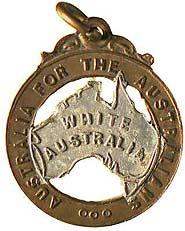
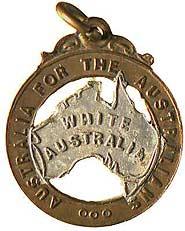
Australia for the 'Australians'

Like Seinfeld and Simpsons episodes, the culture wars arrive a decade late in Australia. Ten years after The Bell Curve set off a furore in the US, Sydney-based academic Andrew Fraser has seized on research linking race, IQ and socioeconomic outcomes to support his claims that Anglo-Celtic society is under siege from dumb blacks and smart Asians.

The fact that Fraser happens to be a law professor at Macquarie University, which has offered to buy out his contract and banned him from teaching in lecture rooms (though not from the campus grounds), has raised issues not only of freedom of speech but of academic freedom at our universities. The allegedly Trotskyite media has helped Fraser cast himself as an informed dissenter being persecuted by minority lobby groups and a left-wing establishment. Macquarie VC Di Yerbury says that the teaching ban reflected safety concerns expressed by Fraser himself, particularly in view of threats by far right groups to converge on the campus and enforce Fraser's right to preach kulturkampf from the pedestal of a Macquarie professorship. According to Fraser, racial attributes fall within his 'area of expertise' as a constitutional lawyer, thus entitling him to market his views under the university's name.

Given Fraser's adoption as the intellectual poster-boy of white supremacist groups like the Patriotic Youth League - to which he apparently gives pro bono legal advice - one wonders if this is a case of serious policy debate or of blinkered tribalism. Best to go straight to the horse's mouth. Take this extract from Fraser's interview on A Current Affair:

Andrew Fraser: It seems to me the basic goal of any immigration policy, if immigrants you must have, is to get people who are basically of the same ethnic stock of the people who are already present.

Ray Martin: What is a typical Australian in your eyes?

Andrew Fraser: It is the sun bronzed, blonde, blue eyed Aussie. That is what brought me down here. That is what, I would say, brought many people down here, the belief that what was really attractive about Australia, was that it was populated by Australians.


They must be short of blonde, blue-eyed people in Canada (whence the good professor hails). Or maybe just of bronzed ones. Consider this excerpt from Fraser's email correspondence with overseas law schools, quoted in the July 20 Parramatta Sun, the local paper which published Fraser's original article:

"Already the legal order is radically skewed against the interests of white men; that tendency will grow more pronounced as the managerial-professional elite becomes more heavily Asian.”

It's possible for a judiciary and legal profession that remain 90% white male and self-regulating to have overly progressive attitudes, but until I see some evidence for this I'll regard the proposition as bunk. Or more specifically as knee-jerk conspiracy theory masquerading as academic discourse, which is the crux of this whole affair.

"[My] argument is that the white Australia policy was fundamentally sound and that it was a mistake to abandon it ... [I am the victim of] the illegitimate demands of ethnic pressure groups and political extremists".

Migrant assimilation, the political influence of minority groups and ideological agendas in our educational institutions are clearly issues of community concern and legitimate topics for debate. It's sad that an educated man like Fraser can only express them through a dated social darwinist prism that turns disempowered groups into community bogeys. This transmutation of underdog into oppressor is a phenomenon that seems pronounced in, if not unique to, Protestant settler societies - the US South, South Africa, colonial (and, apparently, parts of 21stC) Australia. One theory concerns the evolution of a Persecuting Society in medieval Europe and its transplantation into the New World through a perverse transfer of oppression syndrome; but that's a topic for another post.

Fraser claims to be the victim of left-wing ideologues who control our technocratic elites. In fact he is himself propagating an ideology, one with identifiable and depressingly recurrent features. Take the projection of mainstream social vices - 'a culture of tribalism and violence', to quote PYL spokesman Luke Connors - onto powerless minorities, in this case Sudanese refugees. Then there's the spectre of domination by any disproportionately successful migrant group ('Asians', whatever that term means). And don't forget the motif
of inviolable white womanhood - the 'world's most endangered species', according to material being distributed by the White Pride Coalition in Toowoomba (Qld), a town where my Malaysian aunt was recently denied service in a milkbar. All of these are features of a warped worldview that Australia has been trying to ditch since the 1970's but which evidently has deep roots in the Anglo-Celtic society that Fraser champions. The Hanson affair of the mid-90's was in retrospect only the outrunner of a battle for Australia's national soul, of the sort that has been raging throughout political and academic forums in the US for four decades. Asylum seeker wedge politics, the War on Islamic Terror, anti-Indonesian hysteria over Schapelle Corby's trial - multiculturalism isn't launching into the new century off the best foot.

Given that Fraser's contract with Macquarie has only a year left to run he'll hopefully decide to wrap this up as quickly and quietly as possible, treating it as an unpleasant prelude to a comfortable retirement. Since he's so keen on sun-bronzed Australians, perhaps he'll head north above our own mason-dixon line (a.k.a the Qld-NSW border), where the silent majority seem to share his views.