Showing posts with label Oz politics. Show all posts

Monday, December 04, 2006

And the winner is...


(c) The Age

... the Boy from Brisbane, as anyone with the slightest nose for the electoral winds would have predicted. Of course, one would have backed the rookie this time three years ago on the same basis, and we all know how that experiment panned out. Coming a week-plus after the Baillieu flameout, I'm getting queasy from the deja-vu.

Watching Rudd on tonight's 7:30 Report, it was the man's presentational flaws that came across first. He lets his intellect block his personality and has a habit of dodging questions with policy statements, important though those may be. And for a guy who did unscripted theatre, his lines seem awfully rehearsed. But the more I listen to him and read about him, the more substance I find to this maverick in Australian politics - a man who chose a different party from his parents and has some experience of the outside world.

I was annoyed to see Kerry O'Brien stoop to the harping on Rudd's perceived nerdiness. It's a patronising attitude towards Australian voters, who it's assumed won't elect an otherwise qualified man simply because he lacks rugby shoulders or isn't seen at the cricket. What I see is a hard-headed social democrat with a career outside the Labor Party and a truer foreign policy lodestone than anyone on the other side of the House, including the incumbent minister. In short, just what the country needs right now.

He still has to be a leader, though. Rudd's talking tough - in his clipped intellectual fashion - but one needs more than talk to handle a government that fights bare-knuckle and a caucus stuffed with factional prima donnas. He'll have to break some bones if he's going to be more than Latham with a nice disposition and some years in the diplomatic corp.

For Kim Beazley, learning of his brother's death after being dumped by the party he served for 26 years, it's been what the media has with trademark sensitivity dubbed Black Monday. Condolences, Kim. I think it was the right outcome, but still a darned hard way to go.

Sunday, November 26, 2006

Four More Years


There are two ways for people who care about state elections to spend polling night. You can watch the numbers roll on TV while blogging, trying to beat the professionals to some unique insight on the unfolding drama. Or you can watch them in a pub drinking beer with fellow politics wonks. Going with option 2 proved an inspired choice, since it helped break the blogging drought I've had since the last legislative horse-race. So here I am, competing with a hundred other desktop psephologists to dissect Victoria's Choice.

It's not the thrilling stuff of US mid-terms. Granted, 'modest swing to the Liberals' doesn't have the same ring as 'Republicans get their asses handed to them on a plate'. But I'd hoped for something more than a mirror image of the 2004 federal election, with the opposition kept two cycles from a realistic bid and the incumbents left with a wafer-thin majority in the upper house. The foretold Day of the Minor Parties was a non-starter, with the Greens failing to come through, the Democrats consigned to oblivion and People Power nowhere in sight. Family First's relatively respectable polling just shows that other groups are waking up to the 'values' niche that Howard has been working for a decade. All told, the LegCo results were an uninspired outcome for the biggest constitutional shakeup in the state's history. Instead this election's 'historic' character was pinned to it being the second time Victorian Labor has won three consecutive terms. My heart beats faster...

More noteworthy was Labor's ability to hold regional Victoria, or rather the Libs' inability to gain traction there. It's the latest instance of a much-remarked trend that sees country voters drifting from the traditional conservative parties, while battling suburbia becomes Liberal heartland. The driving factor? Reaction against change - neoliberal economics on one side, multiculturalism and 'political correctness' on the other. You want tariffs and subsidised services? Don't vote Coalition. You want government that will roll back black-armband history and lock up the Muslims? Then do.

Taking this further, perhaps the state-federal divide really is hardening into a fixed feature of the nation's political landscape. The major parties have staked out their territory, and a party trying to climb the other hill has to struggle either against urban masses fearful of their identity and lifestyle being eaten away by globalisation, or a hinterland resentful at being cut adrift by coastal metropolises increasingly linked to the outside world. It can't be coincidence that in the face of the Bracks' government's failures, country Victorians confirmed their 1999 decision to throw out the party which sank tax dollars into Melbourne landmarks pitched at city sophisticates and tourists.

Admittedly the parties aren't helping themselves, with their penchant for eleventh-hour dumpings of seasoned leaders in favour of glamorous neophytes (think Quinn-Flegg and Beazley-Latham). Yet another lesson driven home on Saturday; Baillieu's song-and-dance routine was fun for a while, but it proved what US Republicans learned earlier this month - dominating the campaign doesn't translate into votes. It certainly can't blot out this litany of errors:

- Refusing to shave your share portfolio, when your nickname is already the Toff from Toorak.
- Refusing to discuss a coalition that your party needs to govern.
- Promising to scrap the state's renewable energy scheme while the federal Libs scramble to deal, or be seen to deal, with global warming.
- Promising a river-killing dam, in lieu of said renewable energy scheme.
- Promising free public transport for the age-group that is so pleasant to be around on trains and trams.
- Trying to outbid an incumbent, in-surplus government on tax cuts.
- $285 million costing holes.
etc.

The Libs definitely seem to be getting the worse of the talent drought, having turned over management in 7 of 8 states and territories within the past half-year (all 8, if you go back a full year). Coming so soon after the Queensland rout, Saturday's outcome and the Bracks-Costello sniping that followed shows what to expect from Australian politics over the next decade, assuming that Canberra and the High Court don't bludgeon the states into irrelevance: federal-state jousting as a substitute for policy differentiation. It might be a healthy balance, but for COAG's inability to get work done on health, water or indeed anything.

Small wonder that the only cheering in the James Squire on Saturday night was for 'Four More Beers!'.

Friday, July 28, 2006

Conscience of a Conservative


It's a strange age in which the battles of the Middle East become a battle for the soul of Anglo-American conservatism. The drive to enlist conservative support for the ongoing pulverisation of Lebanon has crystallised a long-brewing debate about what exactly conservatism means in the post-9/11 world. When a leading conservative pundit calls neoconservatism a "spectacularly misnamed radicalism," it signals some major internal stresses.

The source isn't hard to pinpoint. 'Conservatism' has become fused with a foreign policy project built on its philosophical antithesis - radical social change. If conservatism means anything, it means valuing and preserving traditional social structures. The Anglo-American tradition rounds this out by taking the individual rather than the group as the political subject, which means being concerned with one's own affairs rather than those of others and restricting the power of the state. Yet today there is relentless presure to define 'conservatism' by commitment to forcing radical change in foreign societies, judging people by groups and accommodating state power over the individual.

That's how we end up in a situation where to be 'conservative' means to endorse the invasion and social engineering of other countries. Or to acquiesce without question every time the government strips away civil liberties in the name of fighting terror. Or most lately, to take sides in an intractable and morally ambiguous foreign conflict. Israel is comprehensively justified and Lebanon must pay the price until various third-party 'evildoers' - the US president's phrase, not mine - are brought to destruction. Today, conservatism means certainty - in the purity of one's cause, the wickedness of one's enemies and the acceptability of any damage inflicted along the way. This is sometimes called 'unilateralism', but the term is usually avoided so as to obscure how a social philosophy has been hijacked by an extreme school of foreign policy.

The problem is that the world is not black and white - a lesson that one lays on top of earlier lessons about distinguishing right and wrong, in the process of reaching maturity. The existence of evil does not justify arbitrary destruction to stamp it out - something that true conservatives understand well and all the 'vanguard parties' of the 20th century did not. Since today's claimants to the conservative mantle have lost this insight, they ought to be called 'postconservatives' rather than 'neoconservatives', as the latter term implies that they've added to the sum total of human wisdom rather than drained it.

The local 'postconservative' mouthpiece is The Australian, which has swapped roles with its foreign affairs editor since AWB was in the news - now Sheridan has some perspective while the editorial pushes a morally blinkered and intellectually obtuse argument. 'Argument' is a generous term for the string of unsubstantiated or simply brainless comments that I've extracted below, with an explanation for why each would be crossed through with red ink if it was in a first-year undergraduate essay rather than a newspaper opinion column.

Not the UN, who in deploying a largely useless peacekeeping mission alongside Hezbollah installations in southern Lebanon made their own soldiers the accidental targets of an Israeli missile and created the strong impression that the international body has taken sides.

One would expect Australia's leading newspaper to explain what the UN was doing in the warzone before calling it useless. Or what the UN hoped to gain by making Israeli targets out of peacekeepers, who are not 'UN' soldiers but the military personnel of various countries. Not that it matters, because it's the UN. One gains a strong impression that The Australian has taken sides...

It only makes sense for Israel to pressure the Government in Beirut to do what it should have been doing all along – kick Hezbollah and its Syrian and Iranian masters out of the country – if you accept the legitimacy of that Government.

Let's rephrase this - 'Israel will get action from the Lebanese government by destroying its infrastructure and displaying Beirut's powerlessness to defend its people. This is the logical outcome of recognising that government's legitimacy'. The same logic that said undermining the Palestinian Authority would help combat groups like Hamas.

President Mahmoud Ahmadinejad regularly declares his desire to destroy Israel while pursuing a nuclear weapons program that many Western leftists – especially in Europe – see as a useful moral and military counterbalance to the Jewish state.

It would have been nice for the editors to buttress this claim by citing all the rallies, opinion pieces and diplomatic maneuvers in support of Iran's nuclear program. But what do you know - there aren't any. Of course as an Australian postconservative you don't need evidence, when you know exactly how 'leftists' and Europeans think...


In the meantime, Israel must make sure that even as it attacks Hezbollah it does not alienate other foes of the organisation.

I struggle to find any redeeming feature in this sentence. At least it gives the Lebanese credit for the same forebearance that Australians would show, were the US military to bomb our country for weeks to get at terrorists in our midst.


Doubtless The Australian's editors, with their focus on the big picture, would consider all these shortcomings superfluous. What matters is that they stand solidly behind Israel as it blasts the shoots of democracy in Lebanon, thus guaranteeing its security for generations to come. It must be hard for people like George Will to watch conservatism bastardised into the sort of 'greater good' mentality that led Marxism down into the pit. On the other hand, it's easy being a postconservative - no matter how much destruction is wreaked, the world will thank you in the end.

Tuesday, June 20, 2006

Which Broadcaster?


Keith Windschuttle's appointment to the ABC board has kicked off a new round of vituperation in Melbourne's respectable journals of opinion. Some selections from the right-hand side of the debate -

This point of view is never given fair coverage in ABC treatments of the subject. It is shouted down or airily dismissed. There is a similar refusal to accept rational debate of most other political and social matters in Australia that do not accord with the prevalent progressivist view.

Or this, from my old politics tutor -

Those who most vigorously pursue the cause of the "independence" of the ABC can't appreciate that most of the time the ABC only ever gives coverage to one side of politics. If government is truly to be "held to account", why is it that the ABC only attacks governments (Labor and Liberal) from a left-wing perspective?

Quite frankly, which station are the ABC's critics watching (or listening to)? Try sifting the ABC website to pick out the current affairs coverage - it takes longer than you expect, because there's not much. Then sit down and watch these programs on a regular basis, keeping an eye out for 'progressive bias'. What you're left with is Tony Jones or Kerry O'Brien grilling ministers and right-wing pundits with a shade more energy than they give other interviewees, and Media Watch playing up each new revelation of government or corporate manipulation.

If that's considered shutting down national debate, then 'mainstream Australia' is less secure than its self-appointed advocates would have us believe. Do the people who sit in the offices of Quadrant and the Murdoch papers - always ready to accuse the left of paternalism - think that viewers can't tell when an interviewer like Jones is skewing the issues? Are they afraid the public will start getting its opinions at the oracle of the ABC?

And how exactly does the ABC qualify as 'Marxist'? The way the right's culture warriors throw this term around makes you wonder whether they've ever met a Marxist (even Windschuttle, who once professed to be one). The only group on the Australian political scene that fits the description is the Socialist Alternative, whose activities these days are confined to competing for poster space on university campuses. Really, the only thing 'red' about Kerry O'Brien is his hair, and that not very much.

One might give the ABC's critics credit for standing on principle: a taxpayer-funded broacaster should not tolerate systemic bias among its news presenters, however mild or restricted. But the same hysterical guns are turned on the Fairfax press and the 'intelligentsia', that amorphous group whose main occupation is subverting the government and denigrating 'ordinary Australians' (another Herald Sun speak-think). Honestly, only a paranoiac could see The Age as some kind of socialist rag. Its commentary is so toothless that even viewed from the far-right shore it's nothing more than - to quote a genuine Marxist - a 'paper tiger'. There are Melbourne papers that use their op-ed pages to slander whole social groups (notably teachers, judges and academics) and undermine one of the major political parties, but they're not Fairfax-owned.

This campaign against the ABC is just another case of the right using sledgehammers against walnuts that offend their sensibilities. Like spending billions on missile defence against the chance of a North Korean rocket hitting Alaska, while the polar ice caps melt and the world runs out of drinking water. Or lobbying to get homosexuals kicked out of the US military while the wheels are coming off in Iraq. Threats should draw responses based on their magnitude, not their ideological component. But it seems that 'conservative' opinion-makers get more intellectual satisfaction from shadow-boxing with terrorist-sympathising, latte-sipping, Australia-hating postmodernists.

Tuesday, April 25, 2006

ANZAC Day, Australia Day


Update 26 April

The lynchmob has been out these two days for Steve Barton and his effort to debunk the claim that Kokoda was 'the battle that saved Australia'. Barton's certainly dug pits for himself with his rant about an ALP agenda and other gratuitous political grenades - e.g. that a Japanese occupation of Queensland would have been tolerable (in view of ultimate allied victory), or that the diggers in New Guinea weren't fighting in defence of Australia's liberty. But the heat his basic argument has received does suggest that the 'ANZAC legend' has become a sacred cow in Australian cultural life.

See these threads at Larvatus Prodeo and John Quiggin.

_________________________________________________

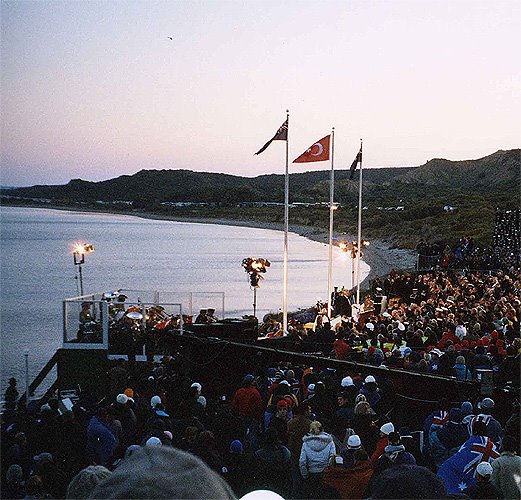
ANZAC Day, as the media constantly reminds us, is the closest to a national day that Australia gets. The salience of overseas military endeavours and Gallipoli in particular in our national mythology is unique, and quite beyond the imaginings of the young men who stormed ashore at the Dardanelles a hundred-plus years ago looking for the 'soft underbelly' of the Central Powers. They didn't find it, but a lot of men died in the process, on which point it's worth noting that Australian dead were outnumbered by Brits (2:1) and even 'Frenchmen' (i.e. conscripted Algerians), not to mention Ottoman troops (10:1).

It appears that this wastage of human life is what most impresses those who make the Gallipoli pilgrimage, or indeed anyone who tries genuinely to tap the spiritual significance of the ANZAC heritage (as opposed to just using it for beating up on ethnics). Claims that ANZAC Day 'glorifies war' are reductionist and distract from more pertinent critiques of its cultural symbolism. One is that it indulges Australian chauvinism, most obviously by asserting an Australian monopoly on such virtues as self-sacrifice and 'mateship' through the vehicle of the ANZAC soldier. On the other hand, there is growing recognition of the other side's story in any given conflict; with Gallipoli for example it's now common - more so among ordinary folks than politicians - to discuss the Turkish contribution and in particular that of Mustafa Kemal (Ataturk), one of history's underrated statesmen.

Another stock complaint is that Australian military commemoration sets up a 'hierarchy of sacrifice', a constant bugbear for veterans of less popular conflicts: Korea, Vietnam, the postwar occupation of Japan. But most significant is the charge that ANZAC remembrance has become an anachronistic touchstone of national identity.

My sense is that Anzac Day has grown in appeal in inverse proportion to confidence about our common identity, future prosperity and national security.

History ... perpetuates collective self-awareness. The Anzac legend offers a comfortably prescriptive notion of who we once were.


The irony here is that Gallipoli marked a break in Australian self-awareness, not immediate but fundamental: the end of Empire and the sense of a separate nation making its own way in the world. Arguably this would have occurred without the experience of having the flower of the country's youth sacrificed on the map-tables of Whitehall, but that's what happened and, as they say, the rest is history. The contemporary issue is whether the ANZAC legacy can be converted into a tradition of general service to the world community, as attempted by today's Australian editorial, or will become the foundation of an oppositional and exclusivist definition of Australian identity.

It can't be coincidence that the swelling youth interest in ANZAC history has occured against a backdrop of globalisation, the growing prominence of 'Asia' and (more recently) a political discourse of clashing civilisations. One can argue over what role the Howard government's promotion of an authentic and monistic national identity has played, but on one point the Prime Minister is definitely wrong. The ANZAC story, like the broader Australian one, is not a closed book but a work in progress.

Wednesday, March 01, 2006

The Mush of Multiculturalism


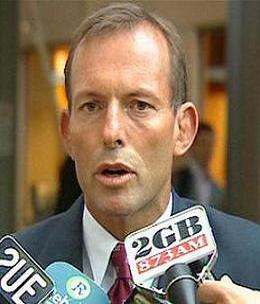
Tony Abbott's gaffe about the ALP's affirmative action policy (branch-stacking) has taken a little wind out of his stand on multiculturalism. Still, one shouldn't confuse a person's integrity with the validity of their argument:

"I do not find sharia law, as I understand it, to be particularly appealing but I think that people are perfectly entitled to make a case for anything that is not inconsistent with the law of this land," [Abbott] said.

Whether shari'a is compatible with our constitutional system can be debated, but the principle is sound. As a tactical approach towards Islamic extremism, I'm prepared to back communal dialogue over assimilate-or-be-ostracised; could it be that we hear so little from moderate Muslims because we leave them no space to talk in? But more importantly, Tony's got the basics right.

An Australian citizen has one obligation: to obey the laws of this country. He or she doesn't have to subscribe to an amorphous set of 'Australian values' laid down by politicians or a particular understanding of Australian history. To quote He-of-the-Magnificent-Ears, citizens should not be subjected to a "test of Australian-ness". If they want to wear the burqa or believe that European settlers committed genocide against aborigines, that's their business and not society's concern.

That's why the 'un-Australian' rhetoric that's slipped into political jargon is so pernicious. The great strength of liberal democracies is their capacity to accommodcate diverse groups under the rule of law, without imposing an elite or majoritarian idea of truth. That's what multiculturalism means - accepting any individual who's prepared to be a functioning member of the body politic, without requiring them to otherwise conform. That's why Abbott is right and Costello wrong. Multiculturalism is not 'misguided', it's fundamentally in tune with the classical liberal principles that this country was built on.

There's much talk right now about the formula that's made John Howard the most popular Australian PM of the modern era (which is to say most popular, since most people can't name any before Menzies). If you had to boil it down to a phrase, it'd be 'identity politics'. Howard has weathered a series of crises plus several rounds of unpopular legislation, and come out ever stronger, because he's managed to identify himself and his party with the worldview of a majority of the population. Lately this has meant constantly referencing a core of innate 'Australian values' around which membership of Australian society must be based.

In other words, Howard has established a cultural creed - that of 'middle Australia,' 'battling Australia ' and the other constituencies on which the Liberal ascendancy rests - as the basis of national politics. After ten years, this approach is running up against the acultural lines on which our constitutional system is organised. It began with post-Keating assertions of 'national character', gained momentum with the asylum seeker battles at the turn of the century and has come to full bloom with society's handling of the 'Muslim problem' post-9/11.

Societies throughout history have achieved cohesion by imposing a given moral and cultural order. But liberal democracies don't, and that's what sets them apart. They endure, and prosper, because people are left alone within the framework set by law and elected government. Just remember that the next tine you hear a call for indoctrination with 'Australian values' or an end to 'mushy multiculturalism'.

Thursday, January 26, 2006

Advance Australia Fair


(c) Nationalvanguard.org


Update
This post has been linked in the Crikey.com newsletter. Under Top Stories (12).
______________________________________


I'd hoped to get through Australia Day unscathed by the Culture Wars, but had to duck as soon as I opened this morning's Age. The front page carried John Howard's call for an overhaul of school history curricula, to replace multiculturalist relativism with a narrative celebrating "the great and enduring heritage of Western civilisation." The op-ed page featured left-wing boilerpate disparaging Australia's "infantile" national symbols and listing the country's various sins, notably indigenous disadvantage and asylum seekers.

Australia Day commemorates the arrival of the First Fleet rather than Federation (which inconveniently falls on January 1); in American terms it's closer to Columbus Day than to the Fourth of July. Australia Day is thus a focus for battles over national identity and its historical roots that Independence Day in the US is usually spared. The PM has taken this to a new level with today's 'This Is Who We Are' speech, which lays out the cultural bedrock of Howard's Australia - Judeo-Christian ethics, British heritage and commitment to racial equality. Apparently "the divisive, phoney debate about national identity... has been finally laid to rest".

The falsity of this statement is evident from Howard's own efforts to tiptoe round last month's race riots in Cronulla, which even this "One People, One Destiny" speech can't escape. Or the more recent debate over the freedom of SriLankan-Australians to barrack for Sri Lanka at cricket matches on Australian turf. Or the ongoing academic battles over racism and white-indigenous relations in Australian history. Our national identity is not a finished achievement but a work in progress, with plenty of social minefields along the way.

Encroaching on these minefields is the swelling balloon of patriotism, most visible in growing public use of the flag and interest in the ANZAC heritage among young people. There's nothing wrong with the Gallipoli pilgrimage at a personal level, but making it a touchstone of national identity is another matter. The concept that this construction of 'Australianness' presents problems for some Australians - that the Cronulla rioters' exclusive claim to the title 'Sons of Anzacs' may have some broad social significance - seems to lie beyond the PM's mental horizon. Much easier to dismiss such problems as the fantasies of a chattering cognoscenti.

Howard's claimed victory in the identity wars is not a reversion to the country's 'natural' state. Like the conservative revolution in America, Australia's rightward drift is the result of deliberate effort led from the top of the political system. Howard came to power vowing to dismantle the cultural legacy of the Hawke-Keating years, which he summed up as excessive orientation towards Asia and away from traditional understandings of Australian history. In other words Howard had a retrograde social agenda, which has been prosecuted through diatribes against 'black-armband history,' back-peddling on reconciliation, slapping flag-flying conditions on school funding grants, establishing National Flag Day, legislative attempts to freeze the flag in its current form, assaults on 'leftist' and 'postmodernist' education bureaucracies, axing the NALSAS program etc. Then there are the more subtle processes, like the rise of racial wedge politics or the entry of the phrase 'Un-Australian' into public discourse.

These trends are not the expression of a single 'true' Australia. They are the imposition of a particular view of Australia through the avenues of power. Needless to say the political left is guilty of the same sin, but since 1996 the boot has been on the other foot. In this context we ought to keep a critical eye on the blooming of Australian 'patriotism,' in case it evolves into something much narrower and socially harmful. The ominous fact that flag sales have quadrupled since September 11, which can only express a mental closing to the outside world, bolsters my apprehension from those first pictures from Cronulla: that the flag and what it symbolises is being appropriated as a tribal badge, rather than the prerogative of everyone who swears allegiance to the Australian Commonwealth - regardless of whether they're white, identify with Gallipoli or adhere to a Judeo-Christian belief system.

Beware log-cabin patriotism. Or assumptions that a harmonious, multiethnic Australia is a finished achievement...

Thursday, November 24, 2005

Death in the Lion City

Update 26/11/05

With less than a week to Nguyen's execution, the pro-deathers now have their own blog, HangVan. Strangely enough, it uses the same template as the Singapore anti-death penalty campaign blog, Changi-Gallow, which was set up a month ago in response to Nguyen's case.

"If coincidences are just coincidences, why do they feel so contrived?"
_____________________________________________


With exams over, I once more have time for the important things in life, like blogging. And seeing my brother off to Japan, where he's language-cramming till February. You never know who you'll meet at the airport; on the way out I ran into our local Attorney-General Rob Hulls, on his way to Singapore to make a last appeal in the case of Nguyen Tuong Van.

For those who don't live in Australia (or do, but under a rock), Nguyen is the young Melburnian who hangs in Changi prison for heroin trafficking in a week's time. When the media picked up his case a few months back, I didn't expect a rerun of the Schappelle Corby affair. Nguyen was unambiguously a drug mule, not to mention Vietnamese and male. I remember remarking to a friend on the comparative lack of clamour over Nguyen's plight, and speculating that Australian perceptions of Singapore as a 'first world' nation and of Indonesia as a 'third world' one were reflected in the credibility given their respective legal systems.


"Our Schapelle?" "Our Van?"

As if to prove me wrong, those first trickles of publicity have turned into a flood. For weeks now the Australian media has editorialised from right and left against the mandatory death penalty's barbarity, the more so when applied by a 'developed' country. The shadow foreign minister said on national television that Singapore has treated Australia with contempt over this matter, which is direct as diplomats get. Even the normally unflappable PM was visibly angry upon learning of Nguyen's execution date from Lasry rather than Lee Hsien Loong, with whom Howard had just appealed for clemency in one-on-one talks in Busan. Newspaper letter pages and the blogosphere have resounded with boycott threats against SIA and Optus (owned by Singtel). Less choleric but equally public has been the tracing hands campaign mobilised by Nguyen's supporters, whose cutout paper hands blanketed the lawns outside the State Library last Friday.

The response from Singaporean columnists and bloggers has been less widespread, though what's out there is aggressive enough, wheeling out the old carts of Western cultural imperialism and racism. Certainly much of the Australian public comment has been turning ugly, with eminents like Gough Whitlam now railing against that "Chinese rogue port city." Even the Nguyen campaign blog has appealed against the "belligerent, jingoistic tone that local press coverage and letters have taken in the past few days," as this is hardly likely to change powerful minds in Singapore where a bipartisan resolution of the Australian parliament failed. If the fatal date hadn't already been set it might even lead to a fasttracking of the execution, as happened with the Barlow and Chambers case in Malaysia two decades ago. When the discourse is studded with words like 'barbaric' and 'primitive', it constantly runs the risk of slipping across that hazy boundary into denigration of the brown man and his law.


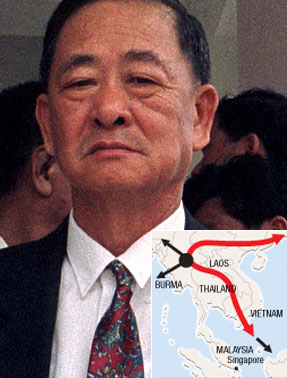
But much of the Singaporean comment has also been knee-jerk nationalism: "our country, our right to kill him," with little debate on the merits of a mandatory death sentence for trafficking a few hundred grams of narcotics. What argument there is tends to feature mantra-like recitation of the 26,000 heroin shots Nguyen was carrying (which clearly equals 26,000 innocent deaths) and uncritical defence of the death penalty's efficacy as a deterrant, without examining whether this is borne out in practice. The flipside of this general failure to question government policy is the turning of media heat on dissenters like opposition leader Chee Soon Juan, who's voiced his opinions in the Australian media after the local press failed to carry them. Nor is there much talk of Singapore's financial links with narcostate Burma, which include direct investment in Southeast Asia's most notorious heroin lord, and the ethical implications for a policy of executing one-off couriers like Nguyen.

Lo Hsing Han, Sino-Burmese drug baron and beneficiary of Singapore's public largesse

Nguyen's case has become a platform for the parlous state of political discourse and civil society in Singapore. Not only is it a veritable running column at Singabloodypore and other internal critics of the Lion City, it has galvanised the local anti-death penalty movement (which now has its own blog) and has been taken up by the NGO-based Asian Human Rights Commission. There is growing international consensus, including several decisions of the Privy Council (Singapore's final court of appeal until 1994), that the death penalty constitutes "cruel and inhuman punishment" under customary international human rights law. How long Singapore's government can continue to respond that the death penalty is not a human rights issue is anyone's guess, but the trends suggest that its old two-track strategy of refusing to sign treaties like the ICCPR while smothering debate at home may not work much longer for a nation with the 29th highest per capita GDP in the world.

For me, the Van Nguyen affair has turned up several personal dimensions. In high school I gave a laudatory presentation on Singapore's model success story, which in retrospect was a tad naive in some departments. I spent the better part of my last summer holiday in Singapore (much of it at NUS proscrastinating on a research paper). As for Nguyen himself, we share the experience of growing up in a first-generation Asian migrant family in Glen Waverley. My old classmate Bronwyn Lew has been one of the faces of the campaign for Nguyen's life. And then, of course, there was Rob Hulls in the airport on Wednesday. As I left the media scrumming for pictures of Hulls having his luggage weighed, I had to reflect that this world really is just one step from the sublime to the ridiculous.

Thursday, November 10, 2005

Mission: Beheading Action


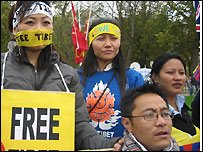
As if the London police didn't have enough to worry about, this week Chinese president Hu Jintao decided to complicate their lives by making a state visit. Last time a PRC leader stopped by (Jiang Zemin in 1999), the Bobbies lost face by manhandling the mandatory Free Tibet crowd. This time round, they hit on the simple expedient of keeping the prostesters on the north side of the Mall while seating Hu on the royal carriage's left, i.e. with a window facing south if you're heading towards Buckingham palace. Needless to say, Hu was far too polite to peer over the Queen's shoulder, saving both governments the embarassment of him having to see the prostesters' political message.

Hu gets a one-sided view of The Mall

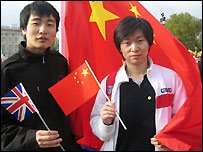
It's unlikely that Hu heard it, either, as the Mall's south side was reserved for the President's homecrowd. The chanted slogans of the Free Tibet and Falungong army were cancelled out out by a roughly equal number of flag-waving PRC expats, some of whom travelled to London for the occasion. It might have been Whitehall's way of introducing Hu to the great British institution of the soccer riot. After all, they went to the trouble of illuminating London landmarks with red floodlights for Hu's visit, the first such show put on for China's benefit since British troops burned the Summer Palace in 1860.

In a strange coincidence, a similar pro-Beijing crowd packed the hall for a speech by rogue diplomat Chen Yonglin at Melbourne University a few months back. A large and apparently coordinated group of Chinese students - about half the 400 people in the audience - contrived to stop Chen even finishing sentences, through unbroken heckling, swearing and chanted paeans to the Motherland. As the media spin - and some personal conversations of mine - would have it, the individuals concerned took their marching orders from the local PRC consulate. These political contacts are allegedly institutionalised in an unnamed "Chinese students' association" at Melb Uni (which could mean any one of ten clubs). The idea is admittedly a small extension from Chen's claims, substantiated by other well-informed sources, that Beijing uses its private citizens abroad for intelligence-gathering and more mundane political activities, whether harassing CCP defectors or cheering visiting PRC grandees.

Chen speaks at Melbourne University on August 5. The lady on his left is Antonia
Finnane, the event coordinator and the history department's resident sinologist.


A local (Chinese) patriot takes Chen to task

I missed Chen on campus, but did go to see him speak that evening at Designs Australia in Carlton. I was hoping to spot placemen in the audience, but came out disappointed; there was no heckling to speak of, though Chen was grilled once or twice during question time, being called a traitor to his face by a local refugee advocate. By the end the heat was being turned on the event coordinator, who was accused of cherry-picking audience questions; at that point she decided to end proceedings in order to make the dinner booking at The Peking Duck on Lt. Burke Street. On the sidewalk outside, a heated argument between audience members offered a better chance to pick out consulate stooges, but I was distracted by a close look at Chen as he was hustled away. Maybe it's the boyish face, but my strong impression was of a young man out of his depth, being kicked around like a political football by various interest groups.

Chen certainly hasn't settled in quietly, with claims that he's now the target of a PRC hit squad, based on tipoffs from a friend inside the Chinese foreign ministry. Operation "Beheading Action"was allegedly authorised to make Chen an example that will plug the stream of Party desertions to western countries. Or maybe it's just designed to shut Chen up, based on his experience to date of indiscreet surveillance at dinner outings and close encounters with cab drivers. After the publicity surrounding his case, for Chen to now have an unfortunate accident would probably be a net political loss for Beijing. Chen certainly hasn't helped things blow over, with his post-defection speaking tour of Australia and a trip to Washington for a hearing before US Senators. As the Chinese proverb goes, the nail that sticks out gets hammered down...

Saturday, September 17, 2005

Diaried and Found Wanting

In between bouts of Warcraft last Thursday night, I flicked on the TV and caught the tail end of Andrew Denton's interview with Mark Latham, the one that the ABC had announced wouldn't screen due to an eleventh-hour NSW Supreme Court injunction (quickly overturned). It was eerie, watching a man dance zombie-like on his own political grave. If the hallmarks of maturity are a) taking responsibility for one's actions and b) giving other people their due, Latham isn't fit to lead a ninth-grade peer support group, let alone the nation.

Bizzarely he feels the need to prove this to the Australian public by publishing his diaries, which consist mainly of self-exculpatory rationalisations for last year's election debacle and unsubstantiated attacks on his colleagues' integrity, not sparing even their accents or deceased parents. The vitriolic scattergun misses no one, from ALP campaign director Tim Gartrell to mentors Whitlam and Keating. The only prominent public figure who escapes unscathed seems to be the unnamed Liberal minister who wrote a conciliatory letter to Latham after his retirement from politics, backing The Australian's observation that Latham's reference point for assigning blame is himself.

Of course that framework's correct; it's only the emphasis that's wrong. 'Troops Home by Christmas', the War on Private Schools and the Forests Policy were all Latham's brainchildren and carried against the advice of colleagues, while other creaky planks (e.g. Medicare Gold) received his full backing at the time - obviously, otherwise they wouldn't have made it into the election platform. The Australian Labor Partay gave Latham the closest thing to a blank cheque one sees in politics; the fact that it bounced is no one's fault but his own.

Most frightening for a one-time Prime Ministerial candidate are the revelations of Latham's slippery grasp on foreign policy, in particular his summation of the US alliance as 'neocolonialism'. Colonialism is something practiced by first world countries on third world ones, not on other first world countries; Australia's only 'colonial' in the sense of not having quite ditched the European settler mentality (the 'white armband' view of history, one might call it). Semantics aside, Latham's comments that the alliance with Washington 'restricts our capacity to integrate with Asia' and 'one day their trouble with China will be our trouble' betray a complete lack of understanding not only of Australia's position within the region but also of its wider dynamics, which Rudd and Downer thankfully have a handle on. The fact that despite these views Latham gave the alliance in-principle support during his election campaign gives us another whiff of the rank opportunism that turns people away from the contemporary ALP.

Watching Enough Rope on Thursday, it wasn't hard to identify Mark Latham's basic character flaw. The man just can't listen, not even to a sympathetic ABC reporter; he has to keep grinding that millstone to feed his ego mill. In the Chinese martial arts, which I happened to be training in before coming home to see Latham hang himself with Andrew Denton's proferred noose, a capacity to listen is the one quality demanded of a pupil. If you don't listen, you don't accomplish things. Compare Latham's interview technique with that of Howard (or Abbott, or Beazley, whoever) and you'll see what I mean.

The irony is that Latham, who perhaps would have done better in academia than politics, did in fact have the sort of policy vision the ALP needs to get out of its ten year rut. Kim Beazley may not deserve the mud Latham's thrown at him, but his bleating about the government's failure to bulldoze its way into New Orleans is latest proof of the political bankruptcy that led his party to sell the farm on Latham in the first place. Thus despite the Tampa, the Iraq WMD fiasco etcetera, the Liberals still got my vote at the last election. They'll keep getting it too, until voting becomes optional or someone else convinces me that they're an alternative government for this country.