Showing posts with label War on Terror. Show all posts

Monday, October 23, 2006

Iraq: Old Wars and New


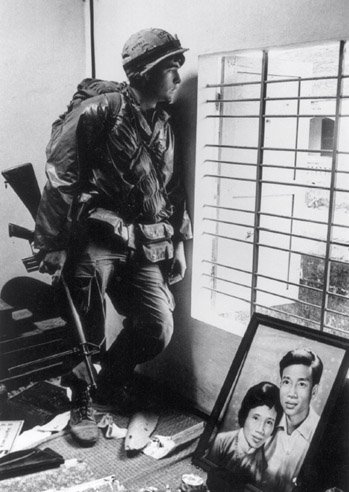
Judging from the Baghdad bodycount, we politics nerds aren't the only ones getting excited over the US mid-terms. Some are calling this Iraq's equivalent of the Tet Offensive, as insurgents ratchet up the violence with the imputed goal of spooking US voters into putting the screws on their government to withdraw troops. Left and Right have summoned the ghosts of 1968 to trade insults and offer more proof that historical analogies best convince people who don't read history. Perhaps the only thing Vietnam references are good for is highlighting how high the stakes are today compared to 1975, a claim for which I'll cite no less authority than Henry Kissinger.

Well, that's not quite true; they show how little attention we give to history, even when it's constantly rubbed in our faces. Want to know what happens when you focus on bodycounts rather than institution-building as a measure of success? Or how gratuitous use of violence can galvanise opposition and hurt your cause more than all the bombs of the enemy? Forget the news, you can watch any grainy documentary on the Vietnam tragedy and wonder at how zealously we repeat mistakes.

At least the leaders of that era were prepared to call policy failure what it was and develop an exit-containment strategy, albeit after dropping more bombs on Indochina than were expended in the entire Second World War. The leaders who got us into today's god-awful mess seem like deer caught in the headlights, too transfixed by the Iraq catastrophe to do anything but shout down naysayers and beg the electorate to stand fast on quicksand. By this point though, the Freudian slips are coming thick and fast:


"If [Beazley] wants to see civil war then all of the international troops should move out of Iraq and you'll certainly see civil war on a grander scale if that happens."

Oh, so there already is a civil war?

Still, one has to feel a little sorry for the Coalition of the Dithering. This time there are no clean solutions, the 'troops-out' and 'stay-the-course' options both being political chimeras. So much we've been told by those participating in the first concerted effort to think Iraq through beyond the tactical level. The Iraq Study Group's co-chair has warned that there will be no silver bullet, but are western publics ready to be told there are only bad and worse options, all of which promise ongoing political pain?

If only, four years back, we'd got Mary Kaldor's memo on the 'new wars' of the post-Cold War world. There will be no more clear battle lines, no more signatures on the decks of warships to bring things to a close. Instead there will be embittered ethnic groups and networks of tech-savvy fanatics fighting over the wreckage of failed nation-states, left by the hand of overmighty nation-states and exploited by rogue nation-states - all beamed into your living room 24 hours a day.

So four decades from now, the archives of the 'Iraq War' won't close with footage of the last chopper leaving the roof of the US embassy. All there will be is endless scenes of suffering people and the long, slow death of Baghdad, which hasn't swum in this much blood since Timur decorated it with pyramids of severed heads.

Sunday, August 27, 2006

'A' is for Appeasement - and Absurd Analogies


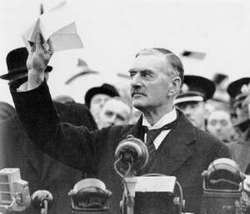
For a paper that champions the integrity of history-teaching, The Australian plays fast with the past. Last Monday, the Age published a long-overdue piece on how the War on Terror has sent abuse of historical analogies into overdrive. Right on cue, the Oz devoted nearly 1200 words in its Friday editorial to tarring former ambassador to Israel Ross Burns as a new Chamberlain, eager to sacrifice Israel to "anti-semitic fascists" for the sake of Indonesian goodwill. It joins a long list of right-leaning broadsheets competing to prove that Godwin's Law applies to the print media as well as the internet.

So why is thinking twice about bombing Muslim populations equivalent to offering up Czechoskolovakia on a plate? You wouldn't know from the Oz editorial, which seesaws from the usual waffle about 'appeasement' to Iran's nuclear program and then back to the Nazis. Like them, Iran and its Hezbollah clients hate Jews and preach violence, so our response must be the same. Never mind that the Hitlerite threat was confined to a nation-state and its military assets, while the Islamist one spreads like a virus through neutral populations. We know there's no room for moral ambiguity or tactical subtlety with either, because they both won support from - wait for it - 'progressives', 'elites' and 'the Left', or so The Australian tells us.

And we haven't even got to Mr Burns' argument, supposedly the subject of the editorial. It's hard to make out amidst the ad honimem attacks beloved of the Murdoch press (apparently Mr Burns' diplomatic career has been "undistinguished", so we needn't respect his opinions). You might wonder why this paper's editors think they can convince readers that they're more qualified to analyse Middle East politics than a man who was ambassador to both Syria and Israel, until you realise you're not supposed to think when reading it. But since the Oz is such a fan of telling the past As It Was, let's have a look at what Mr Burns actually said on the 7:30 report -

'it's been a very common and most prominent theme in government responses for some years now... the first reaction is to say, "Well, doesn't this represent Israel's legitimate right to defend itself?" When I think there are many other complexities in the situation.'
'[There] should be more to our policy than just simply one of uncritical defence of Israel... we 're only emphasising a very small range of points, most of which are very much echoing points made by Israeli politicians and they don't see us as trying to maintain a more balanced attitude to a crisis...'
'...the Indonesians are not necessarily going to be impressed that we have such an uncritical attitude towards Israel and... in particular, at the very great challenge to the future viability of Lebanon, which has been posed by events in recent weeks.'

'the debate is impoverished... it's getting to a point now where our whole standing in the wider context of the Middle East, including the Arab world, is starting to suffer... we identify with one side and that stops us being able to play a more constructive role when and hopefully if such a context develops in the future.'

Ah, now I see how Burns is "offering up Israel to Hezbollah"; how he wants to see "Australia turn its back on a Kadima government"; how he's really trying to aid the terrorists.

How blind I was...


Update


Ross Burns' character assassination has been drowned out by the hysteria over 'Jihad Jack' Thomas, with our favourite right-wing rag again leading the charge.

Meanwhile, the Herald Sun has revived another cause celebre of local 'conservatives' - valourising the two pastors panned for preaching a Muslim conspiracy to take over Australia, by completely misrepresenting what they (and the judge who ruled against them) said. You can listen to Andrew Bolt, or if you're the thinking type, you can read this dissection by a friend of mine over at Boltwatch.

Sunday, July 02, 2006

Gitmo Story


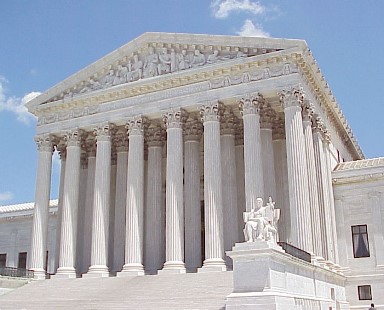
The sorry saga of Guantanamo turned a big corner last week, as Hamdan's case finally ground its' way through the Supreme Court. In 185 pages the judges said that denying America's captives the protections of America's courts is not the president's prerogative, but that of Congress. And amid the histrionics about 'activist judges' and 'robed high priests' undermining the War on Terror, that's where GOP lawmakers and the beleagured administration are mounting their counterattack. A more eloquent leader might have called it the "end of the beginning", rather than the beginning of the end. Bush got by with a flustered "to the extent that there is latitude to work with Congress… we will do so".

That the Court slapped down an executive attempt to excise captured terrorist suspects from the writ of the federal judiciary is no surprise to anyone familiar with apex courts ruling on their jurisidiction. In any case the administration got a red warning light with Hamdi's case two years back; last Friday the justices didn't even bother with new metaphors, merely recycling O'Connor's message that a 'state of war is not a blank check for the President'. Or as Andrew Sullivan put it -

the president's first task is to protect the Constitution, not violate it. He does not have, as this president argued, one accountability moment every four years. He is continually accountable to a constitution applicable to everyone.

The white noise over the separation-of-powers issue has almost submerged the court's other key finding - that detainees must receive the minimum protections provided in a wartime context by the Geneva Conventions. Since the first inmate landed at Guantanmo, the administration has argued that these people are 'unlawful combatants' who have placed themselves entirely outside the laws of war. But this term merely denotes a lack of entitlement to engage in hostilities; it does not exclude the basic protections afforded by the Conventions. The proposition that 'unlawful combatants' lack status under under the laws of war has no basis in international law, domestic law or state practice, including that of the United States.

The proper classification for a terrorist under the laws of war is that of 'civilian'. This may seem absurd and morally offensive, but consider the practical results. Civilians who directly participate in hostilities become legitimate targets. Civilians may be interned where necessary for an occupying power's security, for as long as that power deems necessary. Civilians do not qualify for POW status and so have no right to repatriation or to withhold information from their captors, subject to requirements of humane treatment imposed by domestic and international law.

In other words, treating terrorists as 'civilians' would satisfy all the justifications advanced for slotting them in the legal category - invented by the Bush administration - of 'unlawful combatant'. The fact that the administration is still digging its heels in proves that those jusitifications don't go to the core of what Guantanamo is about. As I've argued before, what they're really claiming is authority to strip non-US citizens of rights in the name of national security. Whether the individuals concerned are in fact terrorists is besides the point.

The core issue is whether people should be denied rights afforded them by both American and international law at the US executive's discretion. We're not talking about rights to freedom of movement or communication here. We're talking about fundamental human rights like freedom from torture and from an unfair trial. We don't know exactly what the people held in Camp X-Ray have done; many have been released on the US authorities' admission that they didn't merit incarceration in the first place. And even if they do, humane standards of treatment shouldn't vary with a person's character. That's the principle on which international human rights law and the American system of government are based.

It'll be a sad day for that tradition when the concept of separating powers and the presumption of innocence drown in blather about an 'existential threat' to western civilisation, as if a few thousand fanatics had the capacity to destroy the United States or any other developed country. So we should give the benefit of the doubt not to the executive, with its responsibility for national security and mountains of information about potential threats, but to the octogenarians who wrote the Supreme Court's majority judgment. As one commentator summed it up:

"They challenged the global notion that there's war and that there's law - and that war trumps law."

Monday, March 13, 2006

Of the SAS, Iraq and Untermenschen


Forty years ago, the archetypal conscientious objector was someone who burnt a draft card that was going to get him sent to Vietnam. Today, he's a military or intelligence officer disgruntled with some aspect of the Iraq fiasco. Ben Griffin joins the growing legion of insiders who have seen the 'enemy' and concluded that he is us - or at least the Bush administration. As an SAS trooper Griffin was paid to risk his scalp for his country, but he won't do it for US foreign policy:

"As far as the Americans were concerned, the Iraqi people were sub-human, untermenschen. You could almost split the Americans into two groups: ones who were complete crusaders, intent on killing Iraqis, and the others who were in Iraq because the Army was going to pay their college fees. They had no understanding or interest in the Arab culture... There might be one or two enlightened officers who understood the situation a bit better but on the whole that was their general attitude. Their attitude fuelled the insurgency. I think the Iraqis detested them."

The term Untermenschen will repel many as moral equivalence, being Nazi jargon for Jews, Slavs and other vermin earmarked for extermination. But it's accurate to the extent that it captures the ideological nature of this conflict, and how this conditions the way US troops relate to the people placed under them. Ideology is and always has been the basis for US action in Iraq. Not WMD proliferation, not counterterrorism, not even preemptive military doctrine per se.

I don't mean an ideological struggle between liberal democracy and 'Islamofascism', to use that ridiculous term from the neocon lexicon. I mean an ideology that asserts one country's right to achieve political change in other countries according to its own design, regardless of consequences for the inhabitants. That engenders a mindset which treats Iraqis as so much cannon fodder in a Project for a New American Century. If this is how the leaders think, is it any wonder the troops behave accordingly?

"I saw a lot of things in Baghdad that were illegal or just wrong. I knew, so others must have known, that this was not the way to conduct operations if you wanted to win the hearts and minds of the local population... because these people were a different colour or a different religion, they didn't count as much. You can not invade a country pretending to promote democracy and behave like that."

Regime change in Iraq was one step in a grand scheme that treats the rest of the world as objects, to be moved around by an American subject; the evidence shows clearly that the decision for war was made in line with this thinking, independently of the WMD argument. With the WMD prop gone and the outcome failing to fit the grand design, all that's left to justify the mess is a felicific calculus. 'Yes, many have died, and the country's going to hell in a handcart, but there've been elections, there's a constitution, we got rid of an evil dictator...'

Politicians and pundits are learning the hard way that it's not for them to decide who should die in the name of freedom. Hence the stream of self-justifying mea culpas from the conservative commentariat (Tim Dunlop has done a neat roundup at his blog, to which I'd add Andrew Sullivan and Victor Davis Hanson). But rather than checking first principles, they blame the variables - an unforeseeable insurgency, the craziness of those Arabs, etcetera ad infinitum. They can't or won't see what Hugh White put so lucidly in this morning's Age:

"The failure in Iraq is not a failure of execution; it's a failure of conception. The occupation and political reconstruction of Iraq was not a good idea badly implemented. It was a bad idea that no amount of administrative skill, political savvy, cultural sensitivity or military firepower could have made work."

Forget the reams of pre-invasion warnings by US government agencies. Forget the Vietnam experience. The lesson should have been learnt back in the days of Napoleon, who pumped 180,000 soldiers - about the number of Coalition troops currently committed to Iraq - into occupied Spain, ostensibly to bring that country the benefits of the Enlightenment and the Revolution on the points of French bayonets. Instead he got a six-year war that bled his army, cramped him strategically and produced all manner of humanitarian horrors. And finished with the Bourbons back in power, and Spain's development set back half a century. Deja vu...

Unfortunately, it seems that ideology is all many in the pro-war camp know. Far from questioning their own worldview, they claim the war isn't being fought ideologically enough. The current round of soul-searching looks more and more like a means of dumping Iraq in the trashbin of conflicts where America (or 'The West') didn't try hard enough, leaving them free to blame leftists, pacifists and the other usual traitors for everything wrong with the world. Next time - and the way the Iranian nuke affair's going, that may not be long - they'll do things right.

A smart man defined madness as doing the same thing repeatedly and expecting different results...

Wednesday, January 11, 2006

The Torture Question


When the Abu Ghraib scandal broke (April/May 2004), I happened to be taking a subject in American politics. I recall my lecturer remarking that in the chessgame of the War on Terror, prisoner abuse was an incredibly stupid move on the US government's part, and that those photos would bedevil US foreign policy for decades to come. He's right on both counts, but he could have taken the point further. America's peeling back of interrogation constraints was indeed stupid, but it was also meticulously planned by intelligent people.

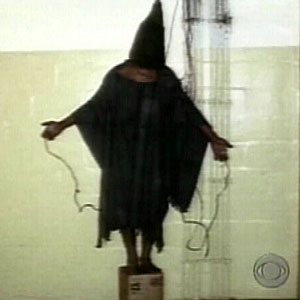
Any claim that Abu Ghraib was an isolated incident - still the Pentagon and White House line - can be thrown on the trashheap of right-wing denial. Aside from the blooming array of secondary books on the subject, a paper trail of the Bush administration's orchestrated rollback of anti-torture provisions in international and US domestic law can be found in The Torture Papers. Or if you're lazy, you can watch Frontline's The Torture Question, which screened on ABC tonight and prodded me into writing this post. PBS being America's friendly taxpayer-funded channel, the entire program can be found here, conveniently broken into 10 minute chunks.

Like all good documentaries, The Torture Question complements the printed word by putting you in the grit of the action. It includes interviews with GTMO prison bosses, Janis Karpinski and the first (ex) US military interrogator to go public about what's happening. What comes through most - apart from the repulsiveness of the acts themselves - is the collusion at every level of the system, notwithstanding that once the scandal broke the grunts who'd got their hands dirty were hung out to dry by their superiors. The general tone recalled a piece I once read about the response of German soldiers asked why they committed atrocities on the Eastern Front: essentially, "everyone else was doing it".

1st ANONYMOUS INTERVIEWEE: I mean, you had a lot of rank there. You know, we're not talking about just a few officers and a lot of soldiers. There was a lot of officers, high-ranking officers, a lot of senior NCOs all over the place. And none of them had a problem, seemingly, with what was going on.

While it wears its sympathies on its sleeve, The Torture Question does give airtime to those who say the Geneva Conventions should not apply in the War On Terror, because the enemy cannot be distinguished. But this is precisely why they should apply. The fact that America was attacked on September 11 is used as a smokescreen to hide the fact that the US is defining the targets of its response. Labelling the inmates of Abu Ghraib or Camp X-Ray 'terrorists' sets up a clasic straw man - for the purposes of principled debate we do not know that they are terrorists, even if in practice many fall somewhere along a reasonable spectrum of US security threats.

When we get to the essence of torture, however, the guilt of the victim is irrelevant. As put by John McCain - one of those rare pollies whose integrity has survived Capitol Hill - this isn't about who they are, it's about who we are. Torture is about asserting power by destroying another human being; it is not a utilitarian device that can be switched on and off as circumstances require. The word is derived from the Latin verb "to twist"; the image is of the rack, still common in late-18th century Europe, that America's founding fathers had in mind when they wrote article VIII of the Bill of Rights.

Rather than going on in this vein I'll direct readers to the Victorian Foundation for Survivors of Torture, whose director puts the case more eloquently than I ever could. The only insight I'll add draws on my reading into why Europe made the leap into the modern world, where other larger, wealthier and more technically advanced societies failed. If there's one cultural reason for the West's success it's because in Europe, for all its Bastilles and witchhunts, one couldn't be stretched out and bastinadoed to death at a despot's whim. That is exactly what happened, in principle if not literally, at Abu Ghraib. It continues to happen across the global detention empire run by the CIA and the US military; now outside it, too, if The Torture Question's testimony is accurate.

Spc. ANTHONY LAGOURANIS: Part of it is, they were trying to get information, but part of it is also just pure sadism. You just kept wanting to push and push and push and see how far you could go. It's natural for people to reach an intense level of frustration when you're sitting there with somebody that you feel you have total control over and total power over, and you can't get him to do what you want. And that you do that all day, every day. And at some point, you want to start raising the stakes.


Saturday, October 22, 2005

Brave New World


SBS has gained its five seconds of global fame by breaking footage of the US military's latest scandal - the burning of bodies of alleged Taliban fighters, ostensibly for reasons of hygiene but probably as an attempt to lure the deceased's compatriots down from the mountains, given the pointing of the corpses westwards (towards Mecca) and the perpetrators' liberal use of the word 'dog'. Add to that the fact that cremation is forbidden for Muslims, and the Pentagon PR team, who must be ruing the day their bosses thought of 'embedding' journalists with combat units, is once again in damage control mode.

Ironically it's always the mildest incidents of US misconduct that get the media blowtorch, allowing conservatives to trivialise the issue ("terrorists murder hundreds in Iraq each day while we quibble about whether a Koran was flushed down the toilet at Guantanamo", etc). We never hear about the secret empire of detention and torture centres run by the Pentagon and the CIA, one that spans the globe and has 'processed' 50,000 odd people since September 11. Some have been held continuously since being taken into custody; many have been tortured, by US personnel or those of host states; none have been charged or tried, or had their families informed of their fate. Guantanamo and Abu Ghraib are just the tip of the iceberg - or the thin edge of the wedge, if you're the pessimistic type. Consider these extracts from one of the most lucid analyses of the 'War on Terror' I've come across -

"It seems too easy for the President to divest anyone in the world of rights and liberty simply by announcing that the US is at war with them and then declaring them unlawful combatants if they resist ... [this] amounts to a kind of heads-I-win-tails-you-lose international morality in which whatever it takes to reduce American risk, no matter what the cost to others, turns out to be justified."

"[The US approach since 9/11] replaces the ideal of law as a protector of rights with the more problematic goal of protecting some innocent people by sacrificing others ... [this] no longer resembles law as Americans generally understand it".

"The War on Terorrism has become a model of politics, a worldview with its own distinctive premises and consequences ... it includes a new model of state action, which depresses human rights from their peacetime standard to the war-time standard, and indeed even further. So long as it continues, the War on Terrorism means the end of human rights..."

The foregoing was written in 2003, before the invasion of Iraq and before the Bush administration's systematic effort to circumvent the Geneva Conventions while covering its backside legally was fully uncovered. It helps one put things in perspective at a time when Australia's state and federal leaders are asking us to let through reams of new security laws on trust. Western governments haven't delivered on the whole 'trust' thing since those planes hit the towers four years ago. Where they have succeeded is in persuading us to grant them ever more draconian powers for the duration of a war that as defined has no logical conclusion.

To be afraid, very afraid? Or to be alert, not alarmed? That is the question...